---
title: Fuel prices, work pressure and short tempers
description: Fuel prices and work pressure can quickly turn into poor sleep, short tempers and stress at home. Practical ways men can respond before it spills over.
image: https://blog.mancounsellor.com.au/hubfs/man_counsellor_new_exact_1200x628.png
---
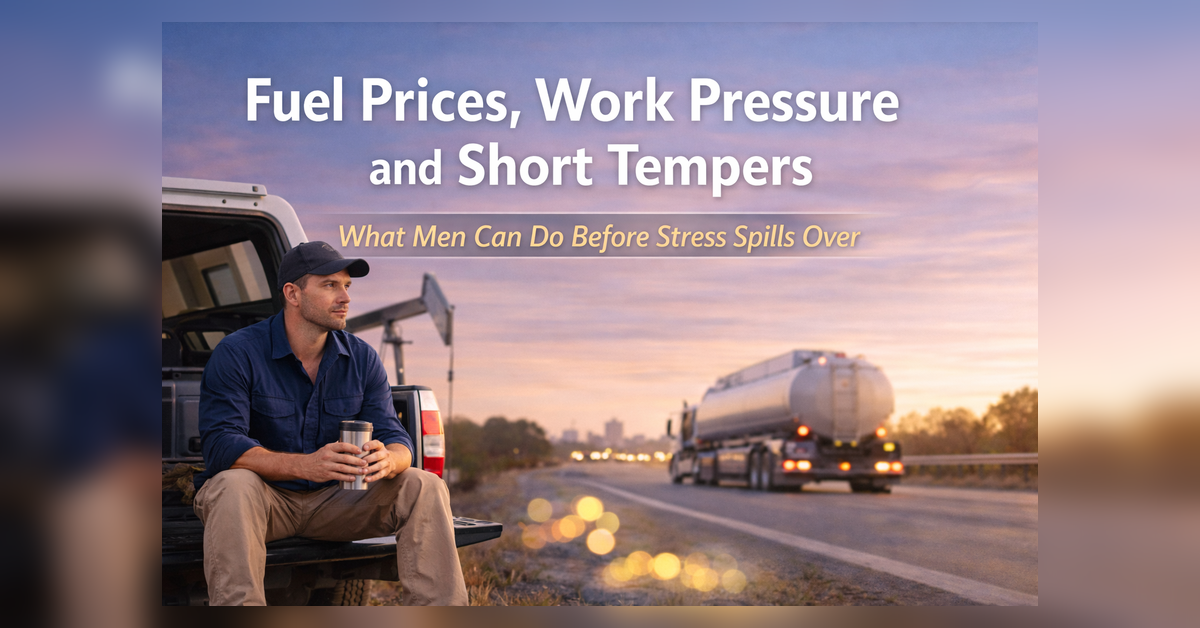
# Fuel prices, work pressure and short tempers
When outside pressure rises, it rarely stays outside.
A jump in fuel costs does not just hit the bowser. It hits the grocery bill, the work commute, the household budget, the mood at home, sleep, patience, and the way stress shows up in everyday conversations. Men often do not talk about that pressure directly. They absorb it, keep moving, and tell themselves they are fine. Then it leaks out sideways as irritability, withdrawal, overworking, drinking more, poor sleep, or snapping at the people they care about.
The current Middle East conflict has triggered a major oil supply disruption, with the International Energy Agency describing it as the largest oil market supply shock on record. Australia has already moved to ease fuel standards temporarily to boost supply, especially for regional communities, farmers and other sectors that rely heavily on transport and diesel.
This is not about panic. It is about recognising a pattern early.
When pressure builds in the economy, it often builds inside people too.
## Stress does not always look like stress
A lot of men do not present with the words, “I’m overwhelmed.”
It looks more like:
- getting shorter with your partner or kids
- losing patience faster than usual
- feeling flat, wired, or mentally cooked
- staying busy so you do not have to think
- zoning out on your phone or TV
- drinking more often or more heavily
- taking work stress home and home stress to work
- poor sleep, tight chest, headaches, clenched jaw, or constant tension
That is one reason early support matters. Men are often less likely to seek help early, and more likely to keep pushing until the strain shows up in other ways. Research on Australian men has also found a two-way link between financial stress and health: financial stress raises the risk of later mental and physical health problems, while poor health can make financial strain worse.
## Why fuel prices can hit harder than people realise
Fuel is not just another bill. It is one of those costs that ripples through almost everything else.
For some men, especially in regional areas or shift-based work, higher fuel costs can mean:
- more money disappearing before the week even starts
- more anxiety about keeping up with bills
- longer mental carry-over from work
- more pressure to work extra hours
- less room for recovery, exercise, or family time
The Australian Institute of Health and Welfare reports a strong relationship between financial stress and mental health, especially during periods of broader cost-of-living pressure. Recent Australian research on men also found that financial stress was linked with a 53% increased risk of developing mental health conditions and a 29% increased risk of developing multiple long-term physical health conditions.
So no, this is not “just about petrol.” It is about pressure stacking up.
## Work pressure and fatigue make everything worse
When money is tight, many men do what they think they are supposed to do: push harder.
They take the overtime. They skip recovery. They keep going when they are already mentally thin.
That is where things can start to slide.
Safe Work Australia identifies psychosocial hazards such as high job demands, low support, role overload, remote or isolated work, poor organisational change management, and traumatic events as real work health and safety risks. Fatigue is also a recognised hazard that can affect mental health, decision-making, concentration, emotional regulation and safety.
In plain English: when you are tired, under pressure, and carrying money stress, you are more likely to react badly, think poorly, miss warning signs, and take that tension home with you.
## Pressure at work often shows up at home
Money stress and work stress rarely stay in neat little boxes.
Relationships Australia’s 2024 Relationship Indicators report found that cost of living and money problems have become major relationship pressures for Australians. Their reporting also noted that about 5.6 million Australians were experiencing cost-of-living pressure on their relationships.
That does not mean higher fuel costs “cause” relationship problems on their own. It means external stress lowers people’s bandwidth. Patience shrinks. Conversations get sharper. Small issues start carrying the weight of bigger fears.
A partner asks a simple question. It lands like criticism.
A child makes noise. It feels unbearable.
A normal bill arrives. It feels like one more thing you cannot hold.
That is how stress spills over.
## What men can do before it gets to that point
Not everything about the situation is under your control. The response is.
Here are practical moves that help.
### 1. Name the pressure properly
Do not just say “I’m fine, just tired.”
Try something more honest:
- “Money has been on my mind a lot.”
- “Work is getting into my head more than usual.”
- “I’m noticing I’m losing my temper more than normal.”
- “I don’t think I’m handling this as well as I want to.”
Putting words around pressure reduces the chance it keeps leaking out as anger, silence, or avoidance.
### 2. Watch for your early warning signs
Most men have a pattern before things go properly sideways.
It might be:
- poor sleep
- jaw tension
- scrolling late at night
- drinking more
- avoiding conversations
- going quiet
- feeling restless or trapped
- getting annoyed over small things
If you can spot your pattern earlier, you can interrupt it earlier.
### 3. Do not make your partner guess
You do not need a perfect speech. Just stop making the other person decode your mood like it is a hostage tape.
Try:
- “I’m under a bit of pressure and I can feel it affecting me.”
- “I’m not angry at you, I’m just wound up.”
- “Can we talk tonight when I’ve had a chance to settle a bit?”
That alone can stop a lot of unnecessary conflict.
### 4. Cut off bad coping before it becomes your routine
Stress has a way of recruiting fake solutions:
- extra beers
- emotional shutdown
- gambling
- doom-scrolling
- excessive porn
- staying constantly busy
- working longer just to avoid thinking
Some of these can look harmless at first because they provide short-term relief. But when they become the main way you cope, they usually turn on you.
### 5. Protect sleep like it matters, because it does
When stress is up, men often sacrifice the very things that would help them regulate better.
Poor sleep makes everything louder. It reduces patience, worsens mood, affects concentration and makes emotional control harder. Fatigue guidance from Safe Work Australia is blunt about this: tired workers are less safe, less clear-headed, and less able to manage their reactions well.
You do not need a perfect sleep routine. You do need to stop treating sleep like optional admin.
### 6. Lower the heat before important conversations
If the topic is money, workload, or household stress, do not raise it in the middle of peak frustration.
Better approach:
- pick a calmer moment
- keep it specific
- speak plainly
- focus on the issue, not the person
- solve one thing at a time
“Fuel and bills are stressing me out. I don’t want to take that out on you. Can we look at the next two weeks together?” works a lot better than snapping and then pretending nothing happened.
### 7. Get support before things are “bad enough”
This is where a lot of men lose unnecessary time.
They wait until there has been a blow-up, a shutdown, a warning at work, a relationship rupture, or weeks of feeling cooked. Support does not have to be a last resort. Early, practical support can help men regain control before stress becomes damage.
You do not need to be falling apart to do something about what is building.
## A better standard for men under pressure
There is a version of masculinity that says you just take it, stay quiet, work harder, and do not burden anyone.
That version is expensive.
It costs sleep, patience, relationships, health, and sometimes safety.
A better standard is this: notice the pressure, speak about it early, manage it properly, and get support before it spills over onto the people around you or starts running your life.
The situation in global oil markets may or may not settle quickly. Your own response does not need to wait for the headlines to calm down.
If pressure is already creeping into your mood, sleep, work or home life, take that seriously now. Not dramatically. Not shamefully. Just honestly.
That is often the difference between stress passing through and stress taking over.
---
## References
Australian Institute of Family Studies. (2025, October 28). *Financial stress detrimental to men’s mental and physical health and vice versa.*
Australian Institute of Family Studies. (2025). *The two-way relationship between socio-economic status and health conditions.*
Australian Institute of Health and Welfare. (2025, December 2). *Financial stress and mental health.*
Australian Institute of Health and Welfare. (2025). *Prevalence and impact of mental illness.*
Relationships Australia. (2024). *Relationship Indicators 2024 Report.*
Relationships Australia. (2024, December 12). *Relationships Australia reveals significant cost of living impact on relationships.*
Relationships NSW. (2025, January 13). *How the cost of living is impacting our relationships.*
Reuters. (2026, March 12). *World faces largest-ever oil supply disruption on Middle East war, IEA says.*
Reuters. (2026, March 12). *Australia to temporarily ease fuel standards to boost supply.*
Safe Work Australia. *Psychosocial hazards.*
Safe Work Australia. (2025). *Managing the risk of fatigue at work.*
Safe Work Australia. (2024). *Fatigue: a WHS issue.*
**
* [ ](https://blog.mancounsellor.com.au/hs/cta/wi/redirect?encryptedPayload=AVxigLLe%2ByabQlzoBP7cMEdNVddahKeLRVYCjgx%2BmNbmDtDl6uFyM7%2FTa%2FDUHGdKXPnNA9d3Ke6T7SBuY8OgeQsrjuFLK0SF%2FKCxBnPLxKVb5g4dy85sY0%2BSgF0iVLcrqqDiLHCrfjB9VmWKYTeP4%2FNzCnB2E0Q6xzQtlu79E7YSbKjtLjrXdi6cv8e8VCqtxsS4QkUtiJ5cr9sqBg%3D%3D&webInteractiveContentId=261528638924&portalId=442234355) *
* *
[mailto:https%3A%2F%2Fblog.mancounsellor.com.au%2Ffuel-prices-work-pressure-and-short-tempers](mailto:https%3A%2F%2Fblog.mancounsellor.com.au%2Ffuel-prices-work-pressure-and-short-tempers)
## Keep reading
[
Phil Armstrong
### How Men Can Access Relationship Counselling in Australia
](https://blog.mancounsellor.com.au/how-men-can-access-relationship-counselling-in-australia)
[
Phil Armstrong
### Supporting Men Does Not Mean Excusing Violence
](https://blog.mancounsellor.com.au/supporting-men-does-not-mean-excusing-violence)
```json
{
"@context" : "https://schema.org",
"@type" : "BlogPosting",
"author" : {
"@type" : "Person",
"name" : "Man Counsellor",
"url" : "https://blog.mancounsellor.com.au/author/man-counsellor"
},
"dateModified" : "2026-03-15T21:00:00.138Z",
"datePublished" : "2026-03-15T21:00:00.000Z",
"headline" : "Fuel prices, work pressure and short tempers",
"image" : [ "https://blog.mancounsellor.com.au/hubfs/man_counsellor_new_exact_1200x628.png" ],
"mainEntityOfPage" : {
"@id" : "https://blog.mancounsellor.com.au/fuel-prices-work-pressure-and-short-tempers",
"@type" : "WebPage"
},
"publisher" : {
"@type" : "Organization",
"logo" : {
"@type" : "ImageObject",
"url" : "https://blog.mancounsellor.com.au/hubfs/Man-counsellor-concept-2-scaled-removebg-preview.png"
},
"name" : "Man Counsellor"
}
}
```