---
title: "When Talking Feels Like Pressure: Why Men Shut Down in Relationships"
description: Why do some men shut down during relationship conversations? How pressure, overwhelm and the demand-withdraw cycle affect communication & what can be done.
image: https://blog.mancounsellor.com.au/hubfs/Comms_1200x628.jpg
---
Phil Armstrong
# When Talking Feels Like Pressure: Why Men Shut Down in Relationships
# When Talking Feels Like Pressure: Why Some Men Shut Down in Relationships
There are moments in a relationship when one person desperately wants to talk and the other seems to disappear behind a wall.
One partner asks what is wrong. The other says, “Nothing.”
More questions follow. The answers become shorter. Frustration builds, voices change and what began as an attempt to connect starts feeling like an interrogation to one person and rejection to the other.
This does not always happen because someone does not care.
Sometimes, talking begins to feel like pressure before either person realises what is happening.
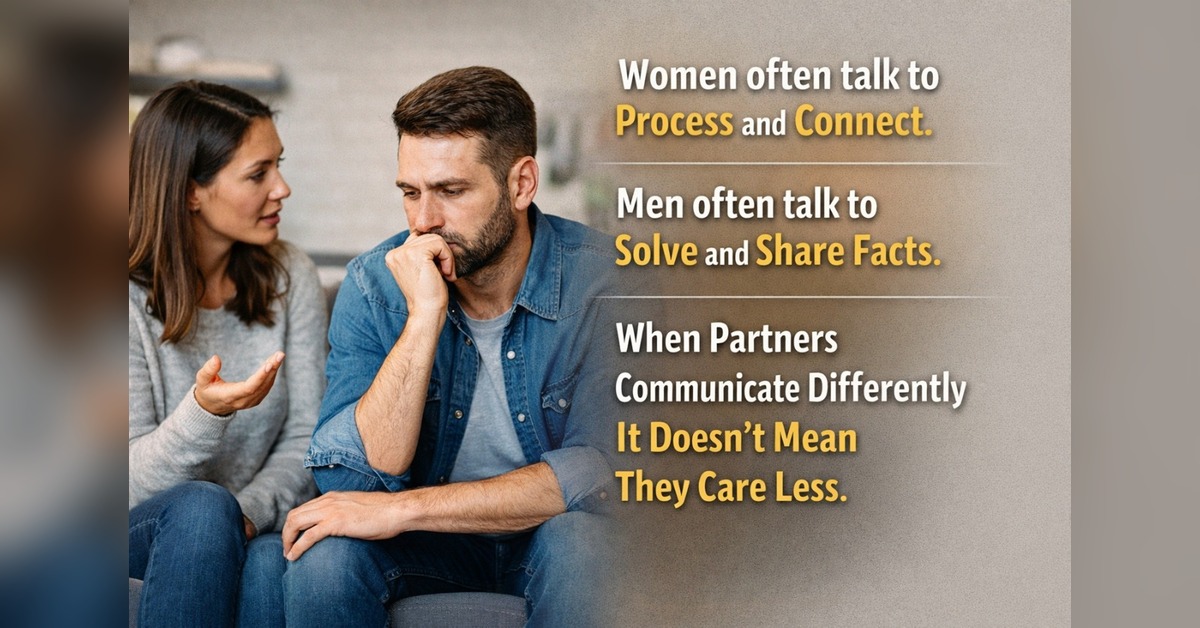
For many men, the problem is not necessarily an unwillingness to communicate. It may be that they do not yet know how to explain what they are experiencing, fear that the wrong answer will make things worse, or feel overwhelmed by the speed and intensity of the conversation.
Understanding that does not mean excusing avoidance, disrespect or emotional withdrawal. Men still have a responsibility to communicate and return to difficult conversations.
But recognising what is happening can help couples move away from the same repetitive argument and towards a more workable way of speaking to each other.
## Key Takeaways
- Emotional shutdown does not automatically mean someone does not care.
- Pressure for immediate answers can sometimes cause further withdrawal.
- Taking time to process is reasonable, but avoiding the conversation indefinitely is not.
- Both people usually play a part in the communication pattern.
- Clear timing, calmer language and one issue at a time can make difficult conversations more productive.
- Counselling can help when the same pattern keeps damaging the relationship.
## Why Do Some Men Shut Down During Difficult Conversations?
Some men can talk comfortably about work, money, practical problems or everyday decisions but struggle when a conversation turns towards emotions, conflict or the relationship itself.
That does not necessarily mean they have no feelings or are deliberately withholding them.
They may have spent much of their life learning to manage problems privately. They may have been taught to remain composed, find solutions and avoid appearing uncertain. They may also have had little practice identifying emotions beyond being angry, stressed, tired or fine.
When a partner asks, “What are you feeling?” the question may seem simple from the outside. Internally, however, the man may be trying to work out what he feels, what caused it, whether it is reasonable and how to explain it without creating another argument.
That process can take time.
If several questions arrive quickly, or the conversation includes multiple past issues, he may stop trying to explain himself and focus instead on escaping the pressure.
This can look like silence, irritation, changing the subject, becoming defensive, leaving the room or saying, “I don’t want to talk about this.”
The response may provide temporary relief, but it often leaves the other person feeling ignored, dismissed or emotionally abandoned.
## The Demand-Withdraw Communication Cycle
Relationship researchers often describe this type of pattern as demand-withdraw communication.
One partner pushes for discussion, reassurance, answers or change. The other becomes defensive, silent or distant.
The withdrawal increases the first person’s anxiety, so they push harder. The added pressure makes the second person withdraw further.
Before long, the couple is no longer discussing the original issue. They are fighting about the fact that one person will not talk and the other person will not stop pushing.
This pattern can happen in any relationship, and either person can take either role. It is not exclusively something men do.
However, many men who seek relationship counselling describe being the person who shuts down when conversations become emotionally intense.
The cycle matters because both responses reinforce each other.
The person seeking answers often feels they have no choice but to keep asking because their concerns are not being addressed. The person withdrawing often feels they have no choice but to escape because they cannot think clearly while under pressure.
Neither person feels understood.
Breaking the cycle means recognising that the communication pattern itself has become part of the problem.
## Does Shutting Down Mean He Does Not Care?
Not necessarily.
A man may care deeply about his partner and still struggle to remain emotionally present during conflict.
He may be afraid of making the situation worse. He may not know what answer is expected. He may feel that anything he says will be interpreted negatively. He may also be trying to stop himself from saying something cruel or reactive.
Silence can sometimes mean, “I do not know how to explain this,” rather than, “I do not care.”
But there is an important limit to that understanding.
Caring about someone does not remove the responsibility to communicate with them.
A man cannot repeatedly disappear from conversations, refuse to discuss important issues and expect his partner to continue trusting that everything will eventually be resolved.
Needing time is reasonable. Avoiding the issue indefinitely is not.
A healthier response might be:
“I can feel myself shutting down. I do want to talk about this, but I need half an hour to settle down and work out what I am trying to say. I will come back at 7:30.”
That statement does three important things. It explains what is happening, reassures the partner that the issue is not being abandoned and provides a clear time for the conversation to continue.
## Why “Just Open Up” Often Does Not Work
Men are regularly told they need to talk more, communicate better and open up.
The message is not wrong, but it is often incomplete.
Telling someone to communicate does not automatically give them the skills to identify what they are feeling, organise their thoughts and explain themselves calmly.
For a man who already feels uncertain or emotionally overloaded, “Just tell me how you feel” can begin to sound like a test he is expected to pass.
He may start wondering whether his answer will be good enough, whether he is saying too much or too little, and whether being completely honest will create another problem.
The answer is not to stop communicating.
It is to make the communication clearer and more manageable.
For some men, that may mean discussing one issue rather than five. It may mean walking together rather than sitting opposite each other in a tense room. It may mean having time to think before responding or writing down what they want to say.
Those adjustments are not about avoiding emotional responsibility.
They are about creating conditions in which honest communication is more likely to happen.
## Taking Space Without Abandoning the Conversation
There is a significant difference between taking a healthy break and using silence to punish someone.
A healthy pause is explained. It has a reasonable timeframe and includes an intention to return.
The silent treatment usually creates uncertainty and forces the other person to chase contact. It may be used to punish, gain control or avoid accountability.
If a conversation is becoming heated, either person should be able to ask for space.
But “I’m done” or “Leave me alone” without any indication of when the issue will be revisited can leave the other person feeling abandoned.
A better approach is specific:
“I am too worked up to do this properly right now. Can we take 30 minutes and talk again after dinner?”
The person asking for the break must then follow through.
Space only works when it is supported by trust. If someone repeatedly promises to return and never does, the pause becomes another form of avoidance.
## How to Raise a Difficult Issue Without Adding More Pressure
This is not about blaming the person who wants to talk.
Their frustration may be justified, especially when they have tried repeatedly to address the same concern.
However, the way an issue is raised can affect whether the conversation becomes productive or defensive.
Starting with a direct description of one problem is usually more effective than presenting a complete history of everything that has gone wrong.
For example:
“I felt dismissed when you walked away during our conversation last night. I want us to work out how we can handle that differently.”
That is easier to respond to than:
“You never listen to me. You always walk away. I cannot talk to you about anything.”
The second statement may reflect genuine frustration, but words such as “never” and “always” can quickly turn the conversation into a defence of someone’s entire character.
It also helps to explain what is needed from the conversation.
Sometimes a partner wants practical change. Other times they want reassurance, understanding or simply to feel heard.
Saying, “I do not need you to fix this. I need you to listen and understand why it hurt,” removes some of the uncertainty.
Specific questions may also work better than broad emotional questions.
Instead of asking, “How do you feel about everything?” try asking, “What part of this conversation is hardest for you?” or “Do you need time to think before you answer?”
The goal is not to make the conversation comfortable at all costs.
It is to reduce unnecessary pressure so both people can address the actual issue.
## What Men Can Do Instead of Going Silent
A man does not need to have a perfect explanation before he speaks.
He can begin by naming what is happening in the moment.
“I am overwhelmed.”
“I am getting defensive.”
“I do not know what I think yet.”
“I am worried I will explain this badly.”
“I need a short break, but I am not abandoning the conversation.”
These statements may feel basic, but they provide important information.
They show the partner that the silence has a reason and that the relationship still matters.
It is also important to listen to the concern being raised rather than immediately defending personal intentions.
If a partner says, “I felt alone when you did not check in,” the issue is not necessarily whether the man intended to be uncaring.
The issue is the effect his actions had.
A response such as, “I understand why that felt like I did not care. I should have checked in,” will often take the conversation further than ten minutes explaining why he was busy.
Accountability does not mean accepting blame for everything.
It means recognising the part that belongs to you.
## A More Workable Way to Have Difficult Conversations
Timing matters.
Beginning a serious relationship discussion when someone is rushing to work, exhausted, affected by alcohol or trying to manage children is rarely going to produce the best result.
Asking, “Is now a reasonable time to talk for 15 minutes?” can prevent a conversation from starting badly.
It also helps to keep the discussion focused.
Choose one issue. Explain what happened, how it affected you and what you would like to be different.
Both people should have space to respond without interruption.
The conversation does not need to solve the entire relationship in one sitting. A useful outcome might simply be agreeing on how to handle the issue next time.
For example, a couple might agree that either person can ask for a break, but they must provide a time to continue the conversation.
That is a small change, but it creates predictability and reduces the fear that the issue will be ignored.
## When the Pattern Keeps Repeating
Most couples have conversations that go badly from time to time.
The concern is when the same pattern becomes the normal way of dealing with conflict.
One person raises an issue. The other shuts down. Pressure increases. The argument escalates. Nothing is resolved, and both people return to everyday life carrying more resentment.
Over time, one partner may stop raising concerns because it feels pointless. The other may avoid closeness because they expect every conversation to become criticism.
The relationship can begin to feel lonely even when the couple is still living together.
Relationship counselling may help when conversations regularly become hostile, one person repeatedly withdraws, trust has been damaged or separation is being discussed.
Counselling is not about deciding which person is the problem.
It can help both people understand the cycle they have become trapped in and develop a clearer way to communicate.
Man Counsellor provides private phone and online counselling for men dealing with relationship strain, communication problems, separation, stress and emotional shutdown.
You may also find these resources useful:
[Why Men Shut Down Instead of Talking](https://blog.mancounsellor.com.au/why-men-shut-down-instead-of-talking)
[How Men Can Access Relationship Counselling in Australia](https://blog.mancounsellor.com.au/how-men-can-access-relationship-counselling-in-australia)
[Men’s Counselling in Australia: Complete Guide](https://blog.mancounsellor.com.au/mens-counselling-in-australia-2026-complete-guide)
[What to Expect in Your First Counselling Session](https://blog.mancounsellor.com.au/what-to-expect-in-your-first-session-and-how-to-prepare-for-meaningful-progress)
## When Communication Is Not Safe
Communication advice is not suitable for every relationship.
If conversations involve intimidation, threats, coercive control, stalking, physical violence, sexual violence, property damage or fear for someone’s safety, the priority is not improving communication.
The priority is safety and specialist support.
In an emergency, call Triple Zero on 000.
[1800RESPECT](https://www.1800respect.org.au/) provides support for people affected by domestic, family or sexual violence.
[MensLine Australia](https://mensline.org.au/) provides phone and online support for men dealing with relationship and mental health concerns.
## Final Thoughts
Talking should not feel like an emotional performance.
But silence should not leave one person carrying the entire relationship either.
Some men need more time, clarity and structure before they can explain what is happening internally. That is understandable.
They still need to communicate that need, return to the conversation and take responsibility for their part in the problem.
At the same time, repeatedly pushing someone who is already overwhelmed may create more silence rather than more honesty.
Healthy communication does not require both people to communicate in exactly the same way.
It requires both people to remain engaged, listen properly and find a way of addressing difficult issues without punishment, avoidance or unnecessary pressure.
The goal is not simply to talk more.
The goal is to communicate in a way that actually leads somewhere.
## Frequently Asked Questions
### Why do some men shut down during arguments?
Some men shut down because they feel overwhelmed, criticised or unable to organise their thoughts. Others fear saying the wrong thing or making the argument worse. While this may explain the reaction, they still have a responsibility to return to the conversation.
### Does silence mean a man does not care?
Not always. Silence may reflect confusion, fear, emotional overload or difficulty explaining feelings. However, repeated unexplained silence can still damage trust and leave a partner feeling rejected.
### How should you communicate with a man who shuts down?
Focus on one issue at a time, explain what you need from the conversation and allow reasonable processing time. Agree on when the conversation will continue rather than leaving the issue unresolved.
### Is taking space the same as the silent treatment?
No. Healthy space is explained, time-limited and followed by a return to the conversation. The silent treatment is often used to punish, control or avoid the other person.
### Can counselling help when only one partner attends?
Yes. Individual counselling can help someone recognise their own communication patterns, respond differently during conflict and become clearer about what they need from the relationship.
### Can Man Counsellor help with relationship communication?
Yes. Man Counsellor offers private phone and online counselling for men experiencing relationship strain, separation, stress, anger and communication difficulties. A GP referral or mental health care plan is not required.
## Ready to Talk?
You do not need to arrive with the perfect explanation.
You can start with:
“I keep shutting down when we argue.”
“I do not know how to explain what I am feeling.”
“My relationship is struggling, and I do not know what to do next.”
Man Counsellor offers confidential phone and online counselling across Australia.
[View Man Counsellor services](https://mancounsellor.com.au/our-services/)
[View counselling fees](https://mancounsellor.com.au/fees/)
[Contact or book with Man Counsellor](https://mancounsellor.com.au/contact/)
## References
Papp, L. M., Kouros, C. D. and Cummings, E. M. *Demand-Withdraw Patterns in Marital Conflict in the Home.*
[https://pmc.ncbi.nlm.nih.gov/articles/PMC3218801/](https://pmc.ncbi.nlm.nih.gov/articles/PMC3218801/)
Leo, K., Miller, R. B., Carroll, J. S., Baumgardner, M. and Li, X. *A Replication and Extension of the Interpersonal Process Model of Demand/Withdraw Behaviour.*
[https://pmc.ncbi.nlm.nih.gov/articles/PMC8004543/](https://pmc.ncbi.nlm.nih.gov/articles/PMC8004543/)
Relationships Australia. Relationship information and support.
[https://www.relationships.org.au/](https://www.relationships.org.au/)
Australian Institute of Family Studies. Marriage and relationship education.
[https://aifs.gov.au/research/research-reports/marriage-and-relationship-education](https://aifs.gov.au/research/research-reports/marriage-and-relationship-education)
** **
** [ ](https://blog.mancounsellor.com.au/hs/cta/wi/redirect?encryptedPayload=AVxigLJ6SVgbL8TAH2jgZAvcwVV0XuQ9EbHJ9aepUKCN6T%2FPn7HmmuoKHZJlqT30x052lpm8WRCW%2BBsrvTiQeGS50hBeqwV9%2FAxGuCmm77XcRMjWVaq0dwdKP8WeytvXMhs6NhBC5rhjXTw%2BFxIgEZlWAIbnLGBRLPdjt6f6aRi30f9pCo%2FwqzW73uxUFC8aAqoXeOMkkAcV2EOEQQ%3D%3D&webInteractiveContentId=261528638924&portalId=442234355) **
** **
**If you got some value out of this article please share with someone else that mya also get some value out of this, using the below icons:**
[mailto:https%3A%2F%2Fblog.mancounsellor.com.au%2Fwhen-talking-feels-like-pressure](mailto:https%3A%2F%2Fblog.mancounsellor.com.au%2Fwhen-talking-feels-like-pressure)
** **
## Keep reading
[
Phil Armstrong
### Modern Family Relationships: There Is No Longer One Simple Family Rulebook
](https://blog.mancounsellor.com.au/modern-family-relationships)
[
Phil Armstrong
### How Men Can Access Relationship Counselling in Australia
](https://blog.mancounsellor.com.au/how-men-can-access-relationship-counselling-in-australia)
```json
{
"@context" : "https://schema.org",
"@type" : "BlogPosting",
"author" : {
"@type" : "Person",
"name" : "Man Counsellor",
"url" : "https://blog.mancounsellor.com.au/author/man-counsellor"
},
"dateModified" : "2026-07-16T02:44:05.682Z",
"datePublished" : "2026-02-05T03:31:30.000Z",
"headline" : "When Talking Feels Like Pressure: Why Men Shut Down in Relationships",
"image" : [ "https://blog.mancounsellor.com.au/hubfs/Comms_1200x628.jpg" ],
"mainEntityOfPage" : {
"@id" : "https://blog.mancounsellor.com.au/when-talking-feels-like-pressure",
"@type" : "WebPage"
},
"publisher" : {
"@type" : "Organization",
"logo" : {
"@type" : "ImageObject",
"url" : "https://blog.mancounsellor.com.au/hubfs/Man-counsellor-concept-2-scaled-removebg-preview.png"
},
"name" : "Man Counsellor"
}
}
```