

Phil Armstrong

|
Key takeaway
|
A lot of men wait too long before getting checked. We tell ourselves we are just busy, under pressure, getting older, out of routine, unfit, lazy, burnt out or needing to harden up. Sometimes there is some truth in that, but sometimes there is more going on than stress alone.
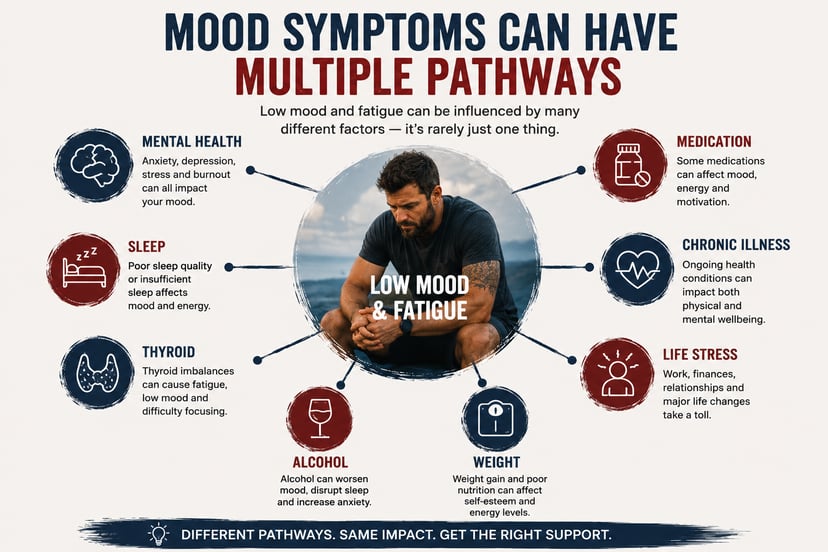
Low mood, fatigue, irritability, brain fog, weight gain, poor sleep, low motivation and loss of interest in sex can all sit under the mental health banner. They can look like depression, burnout, anxiety, relationship stress or general life pressure, but they can also be signs that something physical needs attention.
That does not mean every bad week is a hormone issue. It does not mean low testosterone explains everything. It means men should stop guessing and start getting checked, especially when symptoms are persistent, worsening or starting to affect work, relationships, parenting or daily functioning.
Testosterone is one of the hormones involved in male health. It plays a role in sex drive, erections, sperm production, bone strength, muscle mass, mood and energy. Healthdirect Australia lists possible symptoms of low testosterone in men as reduced libido, erection problems, changes in sleep, poor sleep, hot flushes, lower energy, low mood, and difficulty concentrating or remembering things.
That list matters because many of those symptoms are the exact things men often explain away as stress, depression, burnout or getting older. The problem is that symptoms alone do not give you the full answer. Australian Prescriber notes that male hypogonadism is not diagnosed from symptoms alone. It requires both symptoms or signs and confirmed low testosterone on testing, and those same symptoms can also be mimicked by ageing, illness and other health problems.
This is why self-diagnosis is a poor strategy. You might be right that something physical is going on but you might also be looking at sleep issues, thyroid problems, vitamin deficiencies, medication effects, alcohol recovery, diabetes risk, depression, chronic stress or a combination of several things. The only sensible move is to get properly assessed.
Feeling flat, heavy, disconnected or miserable can be depression but physical health can also play a role. Some medical conditions can trigger or contribute to depression-like symptoms, including thyroid disease, vitamin deficiencies, infections and other illnesses. If your mood has changed and you cannot shake it, it is worth treating it as a health issue, not just a mindset problem.
Tiredness is easy to blame on work, kids, stress, poor discipline or being out of shape. Sometimes that is fair, but ongoing fatigue can also be linked to sleep problems, thyroid issues, anaemia, low testosterone, chronic disease, diet, alcohol use, medication effects or poor recovery. If you are dragging yourself through the day and it has become your new normal, that is enough reason to speak with your GP.
Men do not always describe depression as sadness. Many men are more likely to talk about feeling tired, angry, irritable, restless, numb or short-tempered. That matters because a man might not think he is struggling with his mood, even though everyone around him can see something has changed. If you are snapping more, withdrawing more or reacting harder than usual, do not just write it off as pressure.
Brain fog can come from stress and anxiety but it can also be affected by sleep, hormones, thyroid function, nutrition, alcohol use, medication, burnout and other health conditions. If you are normally sharp and suddenly feel scattered, forgetful or mentally slow, it is worth taking seriously.
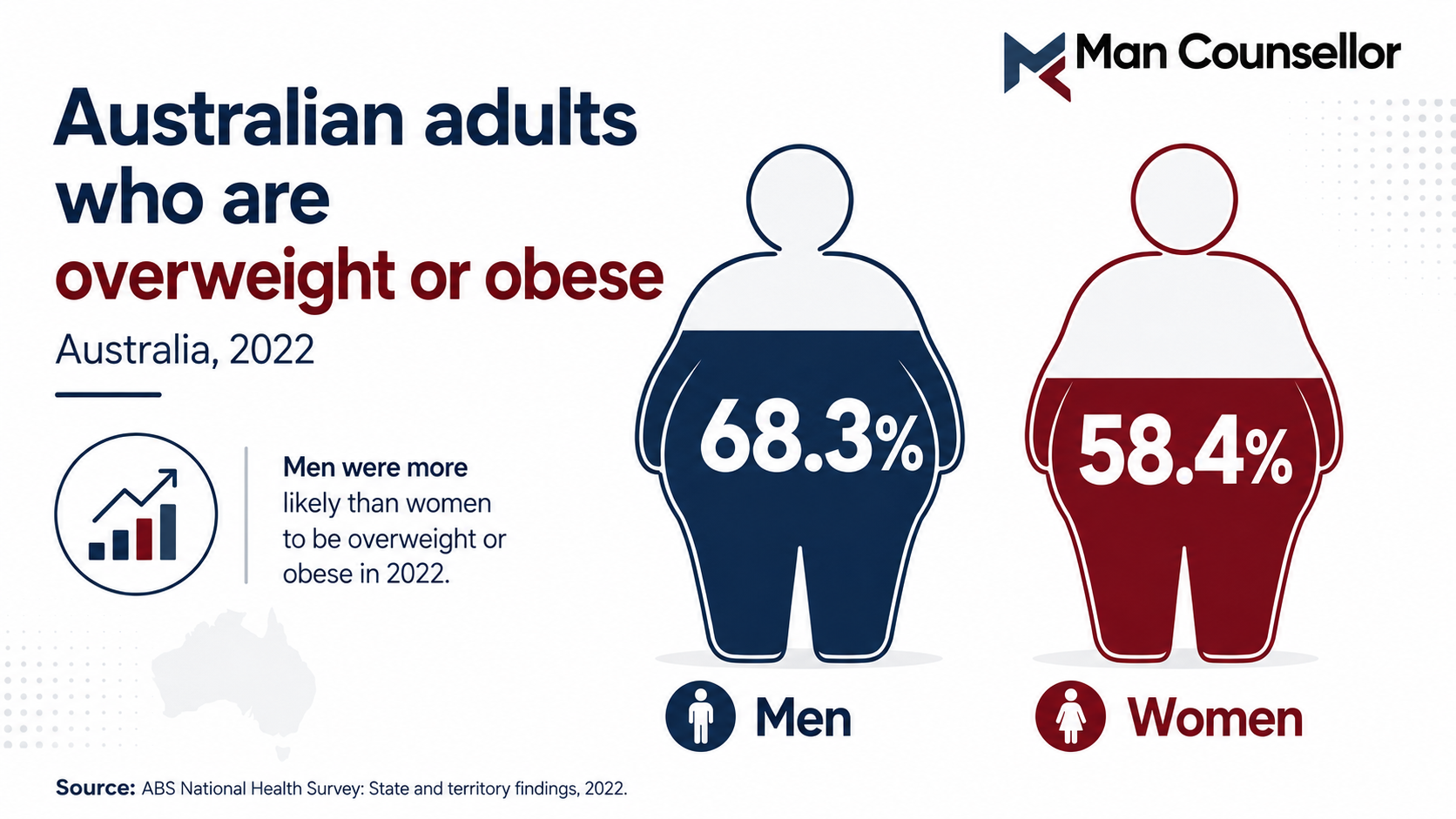
Weight gain is not always just about willpower. Lifestyle still matters but so do sleep, stress, hormones, injury, alcohol, medication, work patterns and major life changes. Australian men are more likely than women to be overweight or obese, with ABS state and territory findings reporting 68.3% of males were overweight or obese compared with 58.4% of females.
Low libido and erection problems can be connected to testosterone, but they can also be linked to depression, anxiety, relationship stress, medications, cardiovascular disease, diabetes, alcohol, smoking history, sleep and general health. It is one of those areas men often avoid talking about, but it can be an important signal that something else needs checking.
There is a trap men can fall into when they start making healthier choices. You quit smoking, cut back drinking, leave a high-pressure industry, start trying to live better and expect to feel fixed. Then, when you do not feel better straight away, it can be frustrating, confusing and confronting.
For men who have spent years in kitchens, mining, oil and gas, FIFO camps, shift work, heavy drinking cultures, high-pressure crews or “just get on with it” environments - like myself, change can hit harder than expected. You might remove some unhealthy coping mechanisms, but the body and mind still have to recalibrate. You may also have more time to notice things you were previously ignoring.
Doing the right thing does not always feel rewarding straight away. That does not mean you are failing and it does not mean you should sit there waiting for everything to magically sort itself out. It means you need a proper plan that includes medical review, blood tests where appropriate, sleep, movement, food, support and a more honest look at what is actually happening.
This is not a “go to the doctor instead of counselling” message. It is the opposite. If you are low, angry, disconnected, anxious, shut down or not coping, counselling can help you make sense of what is happening and stop it spilling into your work, relationship, parenting or health.
At the same time, counselling should not be used as a way to avoid a medical check. A good approach is to see the GP and check the body, talk to someone and check the mind, then look at lifestyle honestly instead of pretending one area explains everything.
At Man Counsellor, we work with men who are carrying stress, pressure, relationship strain, anger, low mood, burnout and major life changes. We can help you navigate those symptoms while you are also doing the medical follow-up. Both can be true at the same time: you can need support, and you can also need blood tests. You can be mentally overloaded, and there can also be something physical going on.
Do not walk in demanding one specific test because you saw it online. Walk in with the full picture and explain what has changed. A simple way to say it is:
“I have not felt like myself. My mood is low, my energy is poor, I have gained weight, my motivation is down, and I want to check whether there is anything medical contributing to it.”
Depending on your symptoms, age, history and risk factors, your GP may consider checking testosterone and related hormones, thyroid function, iron studies, anaemia markers, vitamin B12, vitamin D, blood glucose, diabetes risk, cholesterol, cardiovascular risk, liver and kidney function, sleep issues, medication side effects, alcohol use, blood pressure and general health risks.
That list is not a demand sheet. It is a conversation starter. Your GP decides what is clinically appropriate, but you need to be honest enough for them to see the full picture.
Men often leave things too late. They wait until the relationship is under serious strain, work performance drops, sleep is wrecked, anger becomes normal, or the body forces the conversation. By the time many men ask for help, the problem has usually been building for a long time.
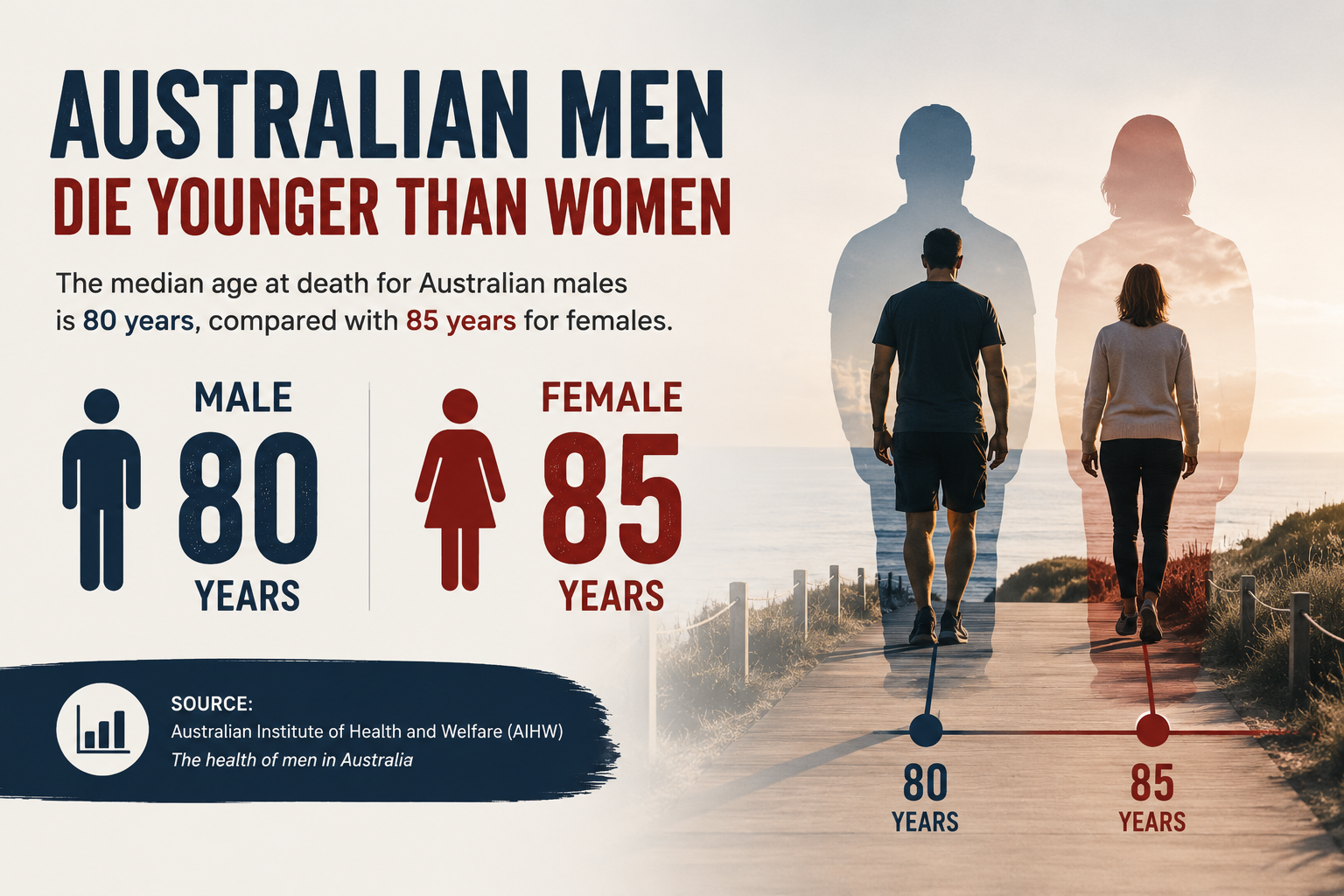
Australian men still have a lower median age at death than women. AIHW reported that in 2023, the median age at death for males was 80 years compared with 85 years for females. That is not something to panic about, but it is a reminder that men need to take their health seriously before it becomes a bigger problem.
Most men do not need another lecture. They need clear information, less shame and a practical next step.
If you drink, understand the risk. If you smoke, understand the risk. If you are gaining weight, do not ignore it. If your mood has changed, do not pretend it has not. If your body feels off, get checked. If your head feels off, talk to someone.
This is not about becoming perfect. It is about not sleepwalking through symptoms that may be telling you something important.
Book a standard GP appointment and write down what has changed before you go. Include how long it has been going on, sleep quality, weight changes, energy levels, mood changes, libido or sexual health changes, alcohol intake, smoking or recent quitting, medication or supplement use, work stress, major life changes and any relevant family history.
Men often understate things in the appointment, especially when they are embarrassed or used to pushing through. Having it written down helps you give the GP the real version, not the watered-down version.
If your mood is getting worse, you are thinking about harming yourself, or you feel like you are not safe, treat that as urgent. Call triple zero 000 if you or someone else is in immediate danger, or contact a crisis support service if you need immediate mental health support.
Do not wait for a routine appointment if the risk is immediate.
Low mood, stress, depression and burnout are real, but sometimes there is more going on underneath it. Low testosterone is one example, but thyroid issues, vitamin deficiencies, sleep problems, alcohol, medication effects, chronic disease, weight gain and other medical issues can all affect how a man feels and functions.
Counselling can help you deal with the mental load. A GP can help check what is happening physically. The strongest move is not choosing one or the other, it is doing both.
If you have not felt like yourself for a while, book the check-up, get the blood tests, talk to someone and stop guessing.
Low testosterone can be associated with low mood, lower energy, poor sleep, difficulty concentrating, reduced libido and erection problems. However, those symptoms can also be caused by many other medical, psychological or lifestyle factors, so proper assessment is important.
Not automatically. Men should speak with their GP about their symptoms, health history and risk factors. The GP can decide whether testosterone testing or other blood tests are appropriate.
RACGP notes that testosterone is highest in the early morning and that blood samples should generally be taken close to 8 am when assessing testosterone.
Yes. Some medical conditions can trigger or contribute to depression-like symptoms, including thyroid disease, vitamin deficiencies, infections and other illnesses.
Yes. Counselling can help with stress, mood, relationships, identity, adjustment, anger, motivation and coping while medical checks or treatment are underway. It should sit alongside medical care, not replace it.
Start with the truth: “I have not felt like myself, my mood and energy have changed, and I want to check if there is anything physical contributing to it.” Then describe your symptoms clearly and honestly.